
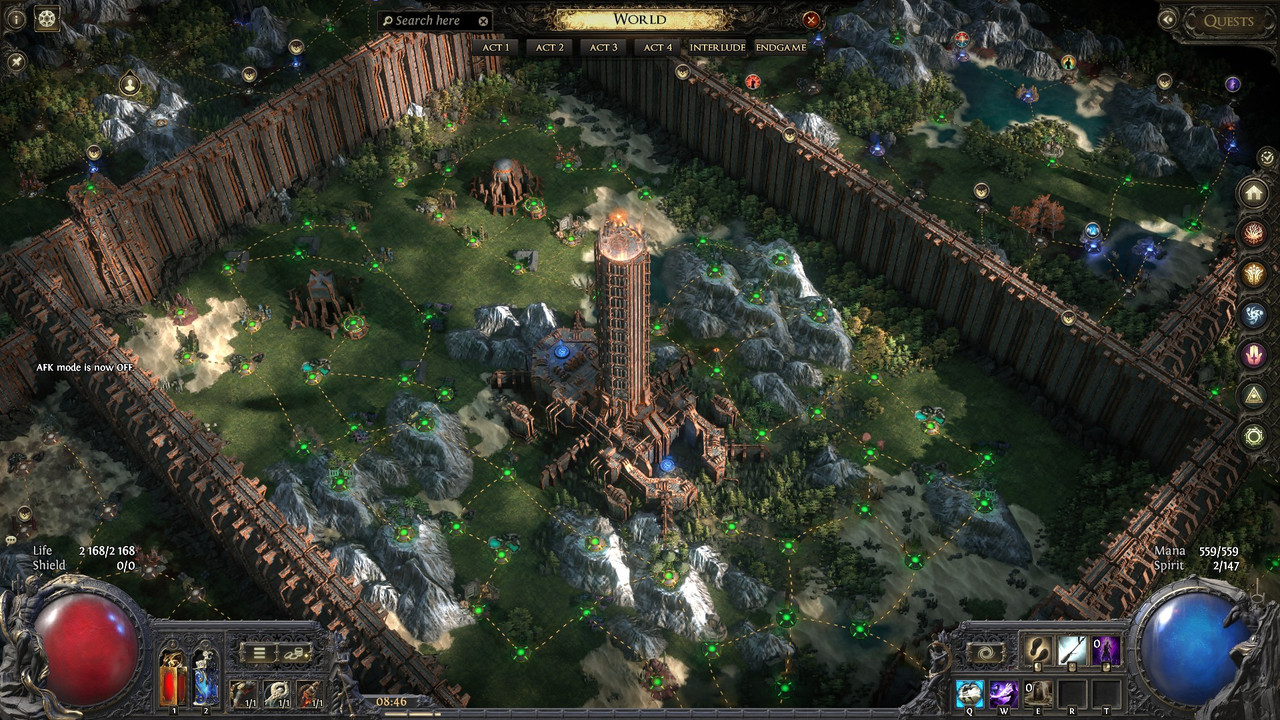
Path of Exile (PoE) has emerged as a beacon for fans of action RPGs, particularly those who cherished Diablo 2. This guide explores the myriad ways in which PoE captures the essence of its predecessor while innovating to meet modern gaming standards. From its complex skill system to its deep lore, PoE not only honors Diablo 2 but expands upon its legacy, offering players a rich and engaging experience.
What Makes Path of Exile a Spiritual Successor to Diablo 2?
Path of Exile is considered a spiritual successor to Diablo 2 due to its intricate skill system, dark atmosphere, and community-driven development.
Both games share a commitment to deep gameplay mechanics and a dark, immersive world. PoE offers a complex passive skill tree and skill gem system that allows for extensive character customization, reminiscent of Diablo 2’s skill trees. The game’s narrative and lore echo the themes of struggle and survival found in Diablo 2, with a focus on moral ambiguity and the consequences of power. Furthermore, the community’s feedback significantly shapes PoE’s development, similar to how Diablo 2 evolved through player input.
- Explore the extensive passive skill tree to maximize your character’s potential.
- Utilize skill gems to create unique builds that cater to your playstyle.
- Engage with the community to stay updated on game changes and strategies.
- Immerse yourself in the lore to appreciate the depth of the game’s narrative.
How Does Path of Exile’s Skill System Compare to Diablo 2?
Path of Exile’s skill system is more complex and flexible than Diablo 2’s, allowing for unprecedented character customization.
The skill gem system in PoE allows players to socket skills into their gear, providing a level of flexibility that Diablo 2’s fixed skill trees could not match. Each skill gem can be modified with support gems, enabling players to create unique combinations that can drastically alter gameplay. For instance, a simple fireball can become a powerful area-of-effect spell when linked with the right support gems. This system encourages experimentation and rewards players for their creativity, fostering a diverse range of builds and playstyles.
Players can also utilize the passive skill tree, which features over 1,300 nodes, allowing for intricate character builds. This depth means that no two characters need to be the same, as players can focus on different aspects such as damage, survivability, or utility. For example, a player might create a tanky character with high life and armor while another focuses on dealing massive elemental damage. This level of customization ensures that players can find a build that resonates with their preferred playstyle.
What Are the Key Features of Path of Exile That Enhance Gameplay?
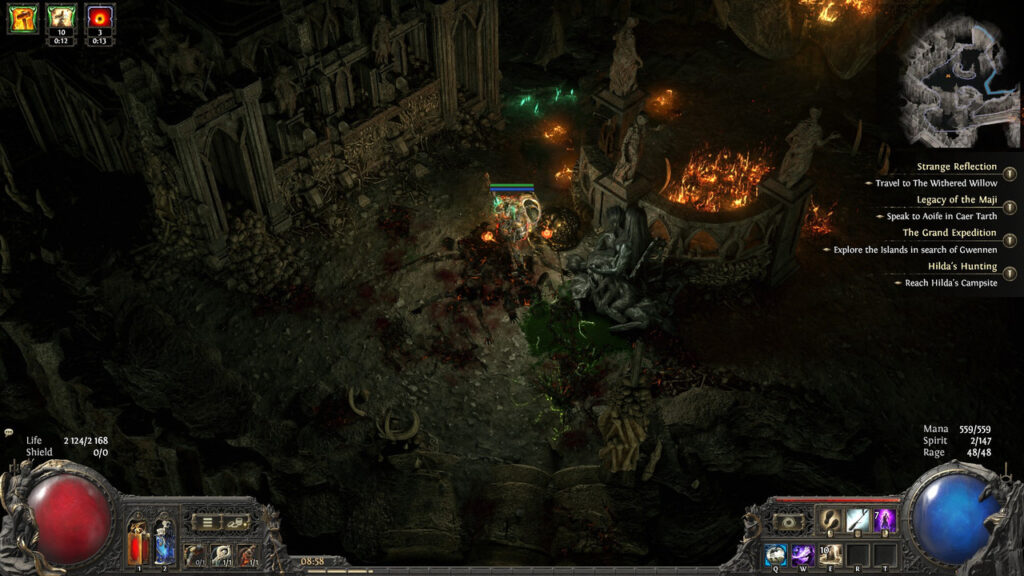
Key features of Path of Exile include its league mechanics, crafting options, and deep endgame content, which enhance overall gameplay.
Each league introduces new mechanics that keep the gameplay fresh and engaging. For example, the Delve league introduced a mining mechanic where players explore an infinite dungeon filled with rewards and challenges. This not only provides variety but also encourages players to adapt their strategies to succeed. Crafting in PoE is another standout feature, allowing players to modify their gear with various crafting materials, enhancing their character’s effectiveness. This system adds a layer of depth as players can pursue specific stats or effects that align with their build.
Endgame content in PoE is robust, featuring maps, bosses, and challenges that require strategic planning and execution. Players can engage in the Atlas of Worlds, where they can shape their own maps and face increasingly difficult foes. This endgame structure is reminiscent of Diablo 2’s endgame but expands upon it by offering more variety and complexity. Players can also participate in the game’s economy, trading items and currency, which adds another layer of engagement and community interaction.
What Are the Differences Between Path of Exile and Diablo 2?
Path of Exile differs from Diablo 2 in its complexity, community involvement, and ongoing content updates.
The following table summarizes the key differences between the two games, highlighting how PoE has evolved from its predecessor while maintaining core elements that fans love.
| Feature | Path of Exile | Diablo 2 | Notes |
|---|---|---|---|
| Skill System | Skill gems and passive skill tree | Fixed skill trees | More customization in PoE |
| Community Involvement | Regular updates based on feedback | Limited updates post-launch | Player-driven development in PoE |
| Endgame Content | Maps, leagues, and crafting | Limited endgame options | More variety in PoE |
How Does Path of Exile Support Community and Player Engagement?
Path of Exile fosters community and player engagement through forums, events, and a robust trading system.
The game’s official forums and Reddit community are vibrant spaces where players share builds, strategies, and experiences. This interaction not only enhances the gameplay experience but also builds a sense of camaraderie among players. Events such as races and community challenges encourage players to compete and collaborate, fostering a lively atmosphere. Furthermore, the game’s economy relies heavily on player trading, which encourages interaction and negotiation among players.
What Are the Long-term Benefits of Playing Path of Exile Over Diablo 2?
Long-term benefits of playing Path of Exile include continuous updates, a thriving community, and a wealth of content that keeps the game fresh.
Unlike Diablo 2, which has seen limited updates, PoE offers regular expansions and content patches that introduce new mechanics, skills, and challenges. This ensures that players always have something new to explore, preventing the game from becoming stale. Additionally, the community-driven approach means that player feedback directly influences game development, leading to a more satisfying experience. The depth of the game encourages long-term engagement, as players can continually refine their builds and strategies.
Frequently Asked Questions
Is Path of Exile free to play?
Yes, Path of Exile is free to play, with optional microtransactions for cosmetic items and quality-of-life improvements. The game does not offer pay-to-win mechanics, ensuring a level playing field for all players.
Can I play Path of Exile solo?
Absolutely, Path of Exile can be played solo, and many players enjoy the challenge of progressing through the game alone. However, the game also offers cooperative play options for those who prefer to team up with friends.
What platforms is Path of Exile available on?
Path of Exile is available on PC, Xbox One, and PlayStation 4. The game has cross-platform progression, allowing players to switch between platforms while retaining their progress.
How often does Path of Exile release new content?
Path of Exile typically releases new content every three months, introducing new leagues, mechanics, and balance changes. This regular schedule keeps the game fresh and engaging for players.





Leave a Reply